|
[
back to travelogue
]
Cold Days in November
Nevada, Nov. 12-15, 2003
|
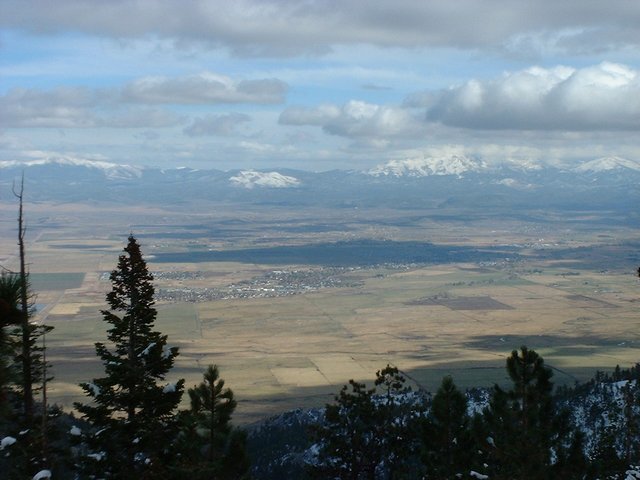
The view from Dagget Pass, just above and east of Lake Tahoe. Shown are the towns of Minden and Gardnerville, in the productive agricultural/ranching Carson Valley.
|
|
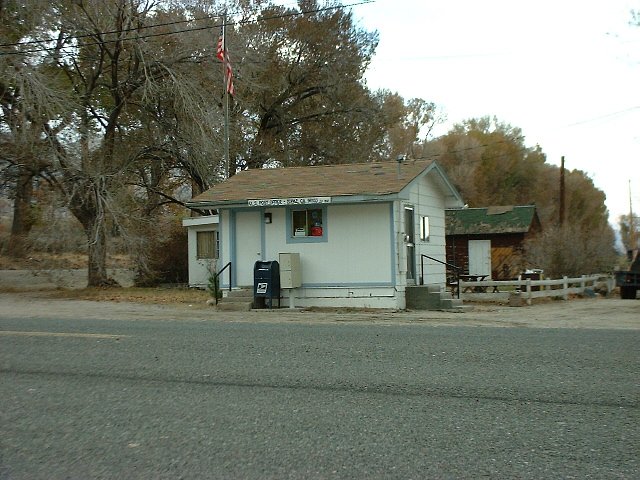
The tiny old post office in Topaz. Not evident from this picture is the scope of "growth" in this area. There are several sprawling residential developments, such as Topaz Lake Estates. No doubt they have their own, strip-mall style post offices.
|
|
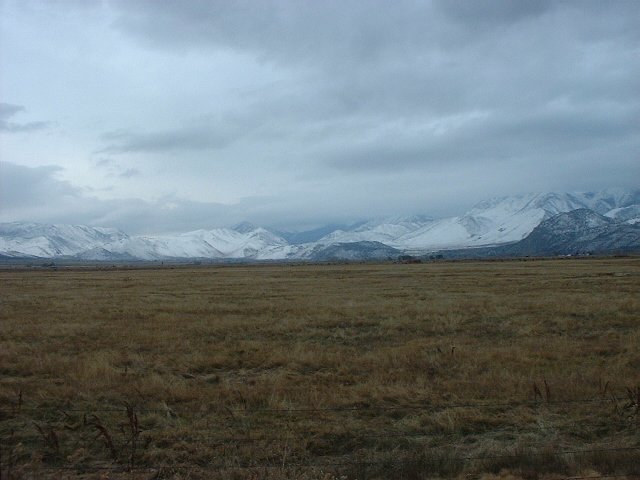
Much of the Sierra Nevada's east side looks like this. Flat, well-watered desert terrain, used for ranching and agriculture. You have to head east a ways to get into unpopulated (and dry) areas.
|
|
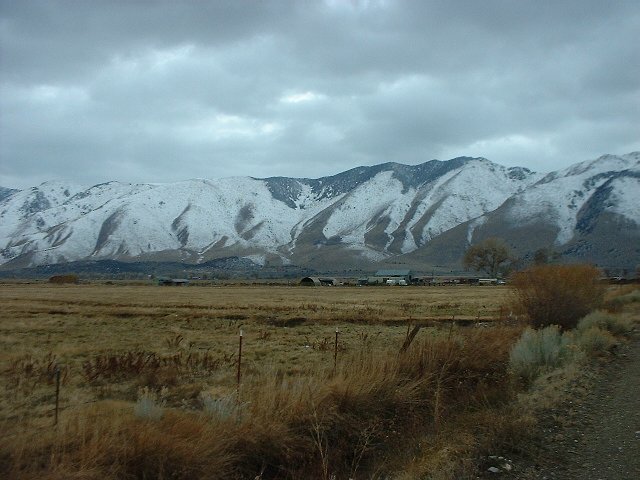
Ranches and pastures. From the east side, the mountains seem to tower up over the plain.
|
|
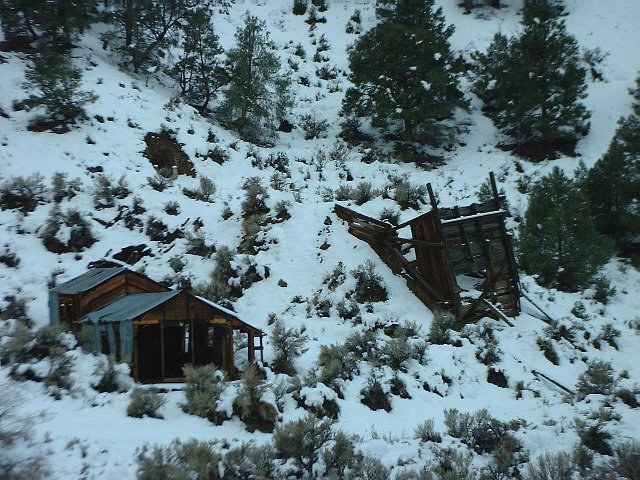
The lower section of the Arrowhead Mine. At upper left is a horizontal mine shaft. (See pictures from inside below.) The structure at right is where the rails from inside the mine would end, except that the rails are long gone. Raw ore would be hauled out in cars and dumped from this platform, I'm not exactly sure how it worked.
|
|
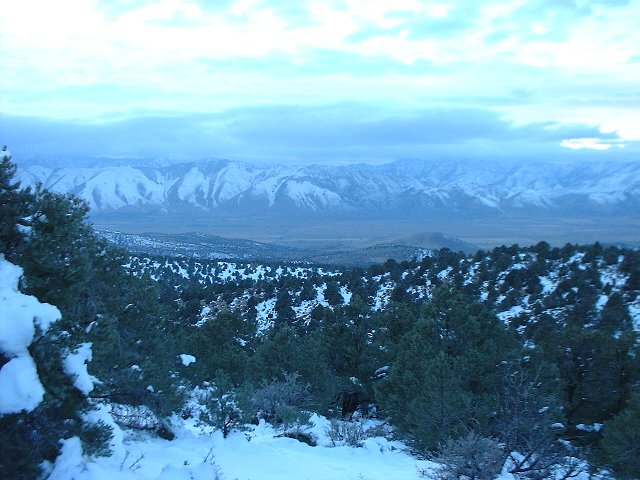
This mine is in the Sweetwater Mountains. As it turned out, the high elevation and recent snowfall meant that I'd have to turn around and head farther east, in search of a lower and more rain-shadowed playground. Pictured is the view west towards the easternmost outlying mountains of the Sierra Nevada. The trees are juniper and pinion pine, mixed in with typical desert brush.
|
|
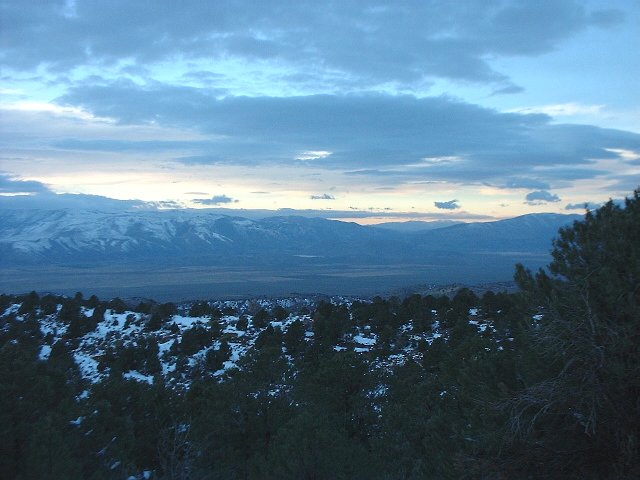
The sun sets at 4:45 this time of year. Winter light presents a real problem for campers -- what do you do between full dark at 5:30 or 6:00, and bedtime at 10:00 or 11:00 or 12:00? And in the morning, it's really cold (30 degrees) until 8:00 or 9:00, so you're not exactly chomping at the bit to get out of your sleeping bag.
|
|
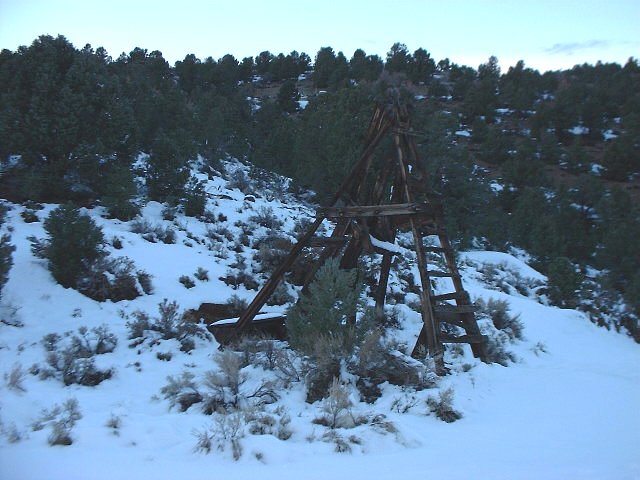
The upper component of the Arrowhead Mine. This is the kind of structure you see above diagonal shafts. In this case, the shaft goes down following the line of the left side of the structure. You can climb into these shafts (depending on the condition of the woodworks inside), but they're relatively dangerous and not that interesting. Vertical shafts will often have a more symmetrical structure above ground, and are not practical for exploring.
|
|
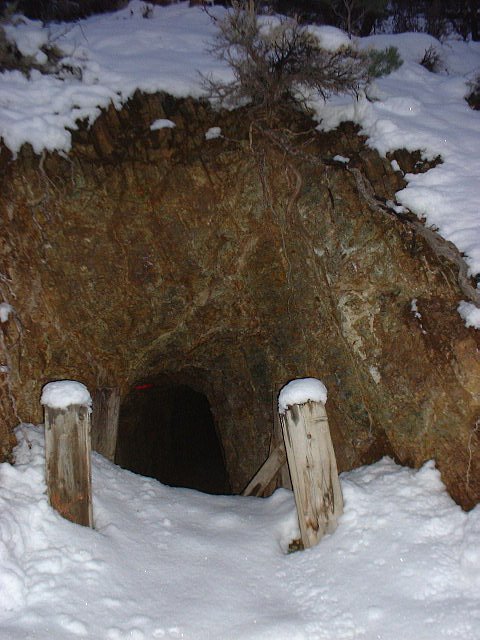
The entrance to the horizontal shaft at the lower Arrowhead. These kinds of mine shafts are easy and fun to explore.
|
|
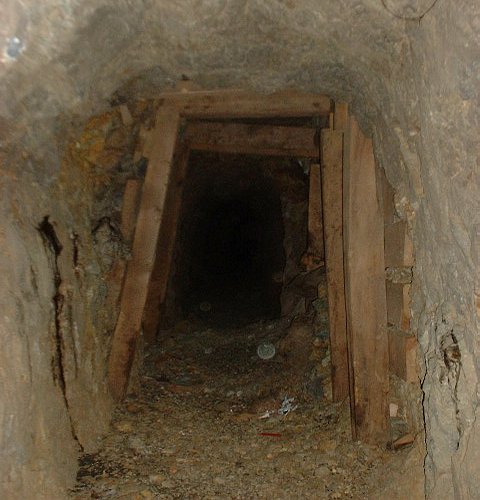
Small sections of horizontal shafts are braced like this, often near a short spur that goes up diagonally.
|
|
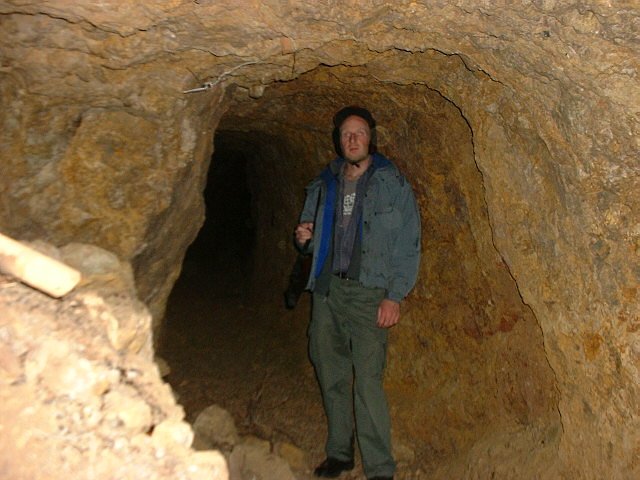
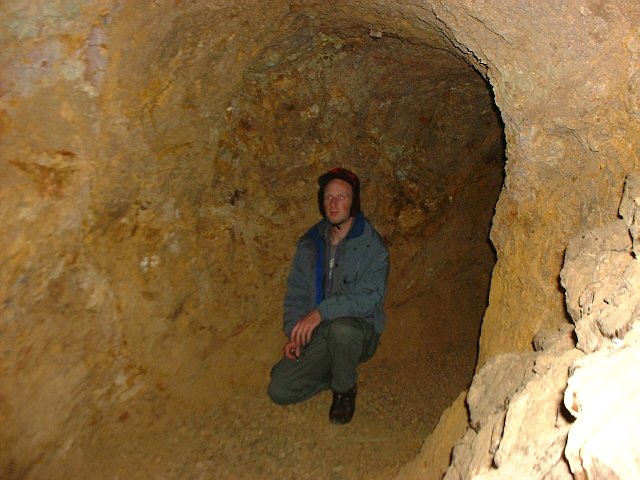
A rather strange picture of me, maybe 150' along the pitch-black shaft. It's warm in here, compared with the outside. (In summer, it would have seemed pleasantly cool.)
|
|
Didn't see any sleeping bats in this mine, but a couple did fly out when I entered. I yelled to let them know I was coming. FYI, you should always carry at least two flashlights when caving like this.
|
|
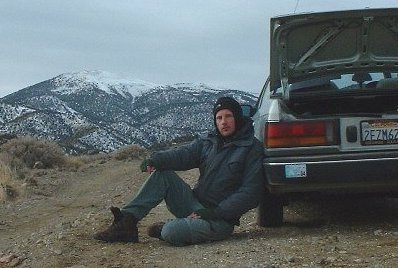
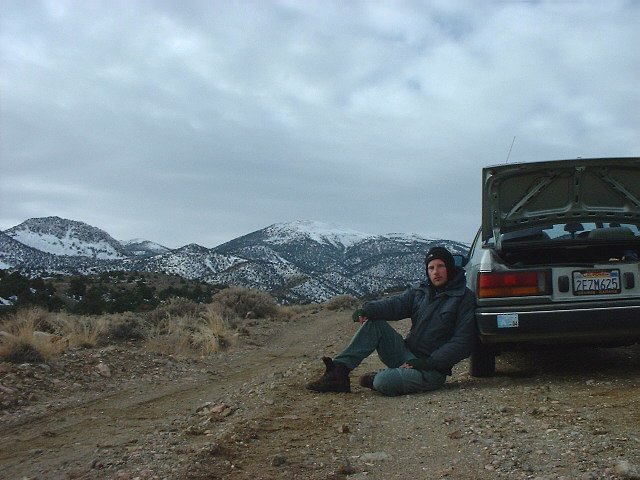
After driving through the night for several hours, I made camp along a lower and more isolated road. Mornings (like this photo) were cool, particularly when the sun was hiding. But mighty mountain man not afraid. This road actually goes over the top of the mountain in the center of the picture, site of the old mine known as Rockland. I spent the day hiking up to the top of the mountain, not returning to camp until well after dark.
|
|
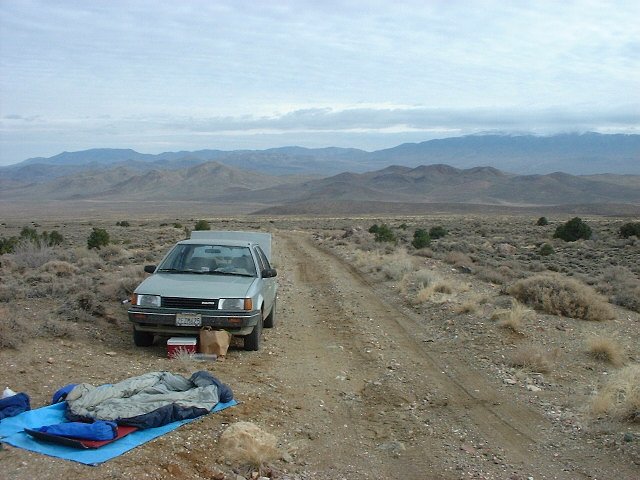
I find it's easier to sleep out than to put up the tent, even when it's threatening to snow. But it was cold. I spent the next two nights at almost exactly this same spot, and used the tent. (The snow didn't start falling until day 4.) Actually, this was the first time I ever stayed by myself at the same spot for three nights. Normally, two is perfect, then it's time to roll. But I had driven too damn much on day 1, and moreover, this area was a little too populated for my tastes, with my camp in a "sweet spot" both interesting and isolated. So why move?
|
|
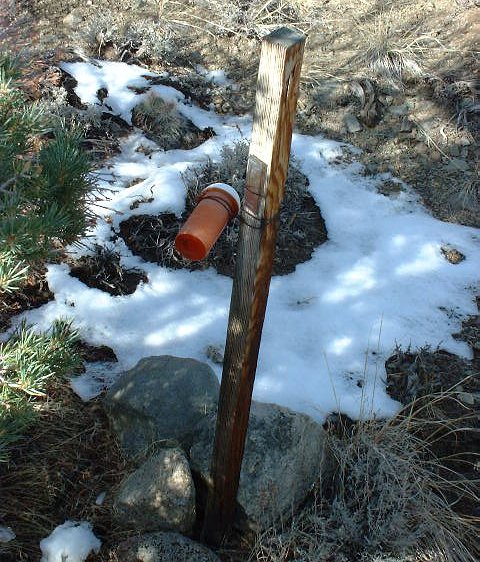
The history of Nevada is a history of mining. Claims are often marked with documents left in waterproof containers, in this case(s) a large pill box. The document inside, dated 1996, specified in great detail the boundaries of the claim, in the name of a company in Reno (2+ hours to the north). I'm guessing these companies come out and do a little mining periodically, perhaps with the main goal of simply keeping the claim alive. The real mining action happened at the end of the 19th century, with quite a bit of activity continuing to the present. Actually, I'm not sure of the later chronology, but can guess a bit from the remains.
|
|
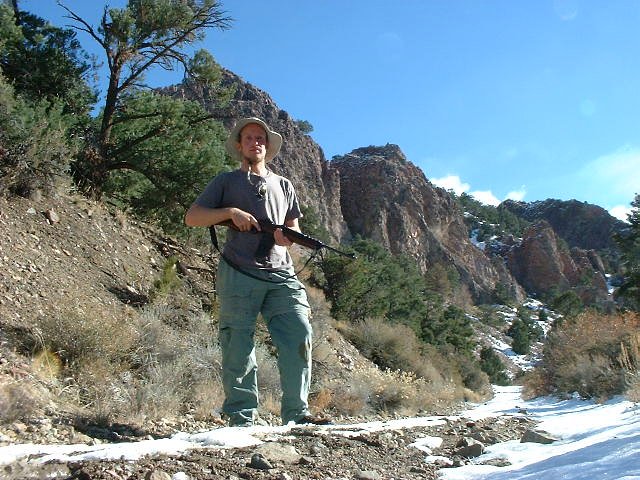
On the way up to Rockland. This road is negotiable by 4WD vehicle, or perhaps even by my car, once the snow melts and mud dries. You have to admire (and I certainly do!) the miners who traveled roads like this to mountain-top mines, before the advent of the automobile.
|
|
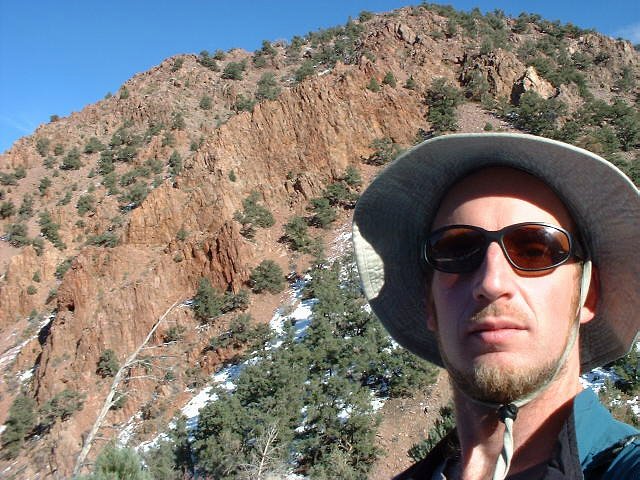
Winter is a great time of year for climbing desert mountains. The sun is mild and the temperatures moderate.
|
|
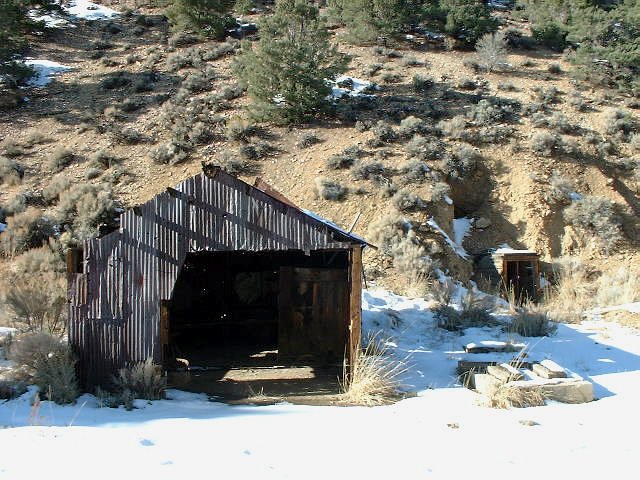
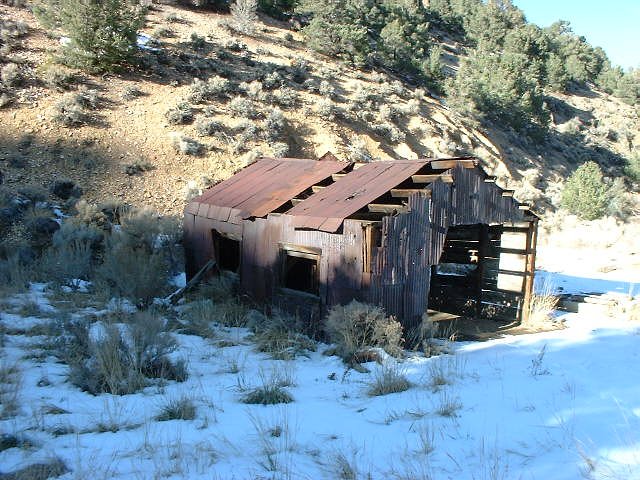
Part of the Rockland mine. The metal corrugated wall of this building is obviously less than 120 years old, perhaps not much more than 20 years old. That's a horizontal shaft at right.
|
|
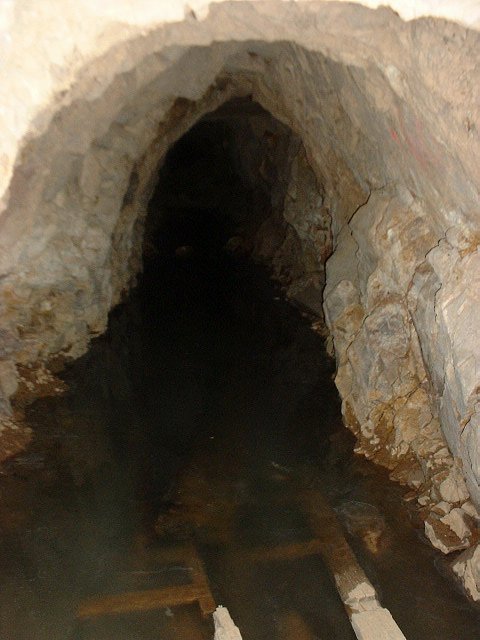
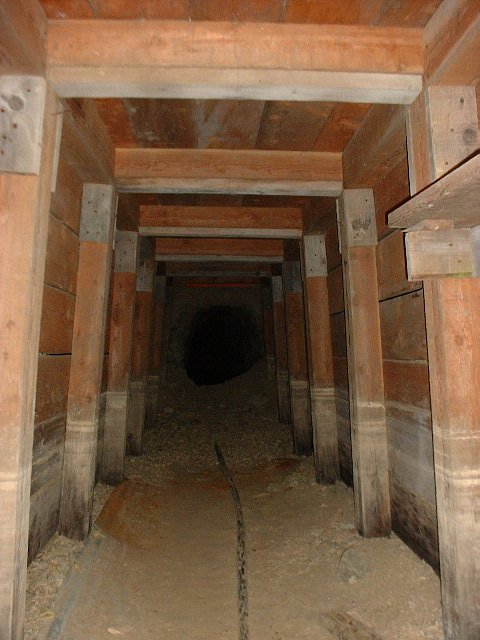
This shaft looked pretty cool, except that it's full of water. I've seen this before, but not high up the side of a mountain. There was a black hose/pipe leading into the water, I'm guessing that somebody comes up here, pumps out the water, and works the mine.
|
|
The entrance to the same shaft. The hose is visible, and the condition of the bracing (and door, not shown) indicates that this mine has been in use recently.
|
|
"200K, Fixer Upper". That's a little real estate/Bay Area joke. This was probably a workshop or storage building for the mine. Down the hill a ways, I found some smaller, wooden residential shacks. Buildings for living in get more attention towards weather- and wind-proofing.
|
|
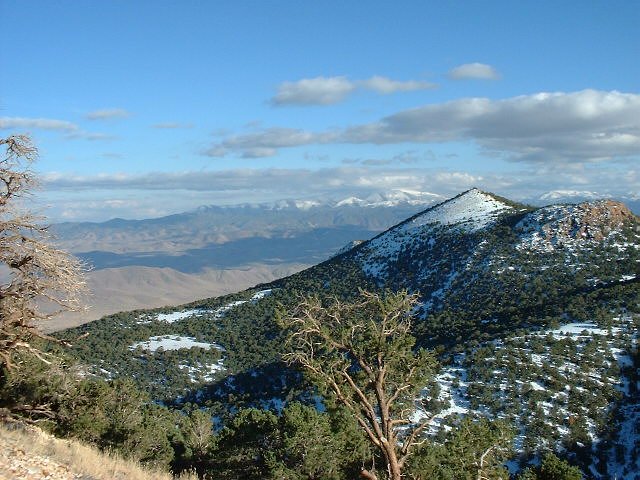
Right purdy hills, with mountainside windswept trees in the foreground, and a major snow-capped mountain in the distance across the East Walker River valley.
|
|
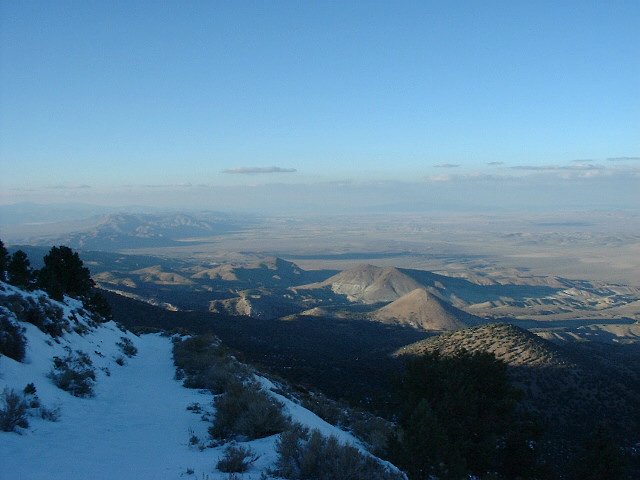
That's the road in the foreground, switchbacking down from the top of this particular mountain. Looking out to the north, you see the agricultural community and valley of Yerrington, an area I remember fondly from three years before. I had stopped at a gun shop (just a trailer actually), Bill's Guns, and chatted with Bill for an hour.
|
|
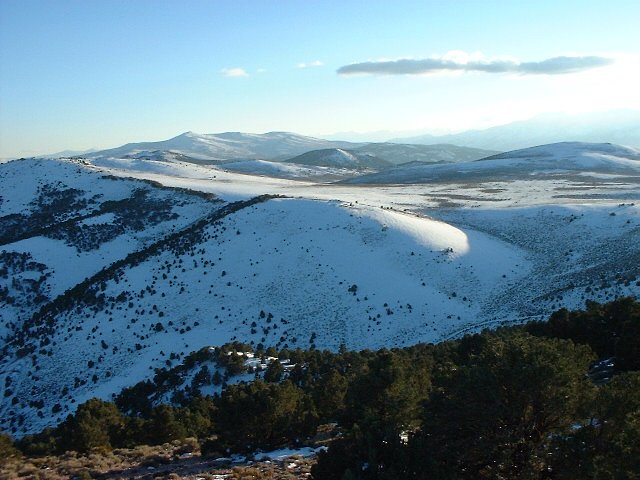
The view southwest from the mountain top. High plateaus like this really toot my horn, and I want to go back. At lower right you can see the lower section of a road, which climbs up to the plateau and probably crosses over to hwy 338, my original destination. I want to drive or ride this road!
|
|
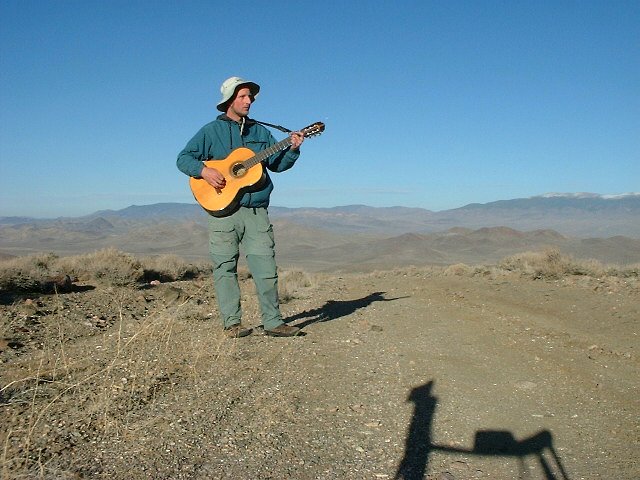
Strumming for an hour, but it was really too cold, and the day too short. Just after I took this picture, three dirtbikers came down the road, the only people I saw for several days. Turns out they had made it over the snowy pass that I had walked. I was very impressed, and ever more motivated to get me one of them off-road motor-sickles.
|
|
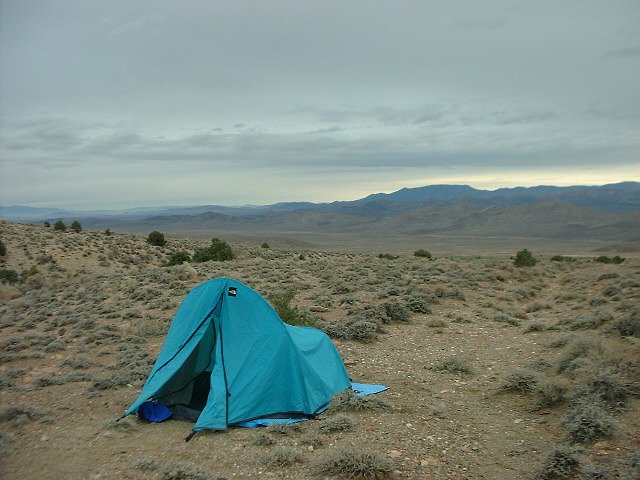
My humble abode, when I take the trouble to set it up, usually only in winter conditions. If you look closely to the right, you can see the two-track through the brush that indicates that this was an old road, paralleling the current road.
|
|
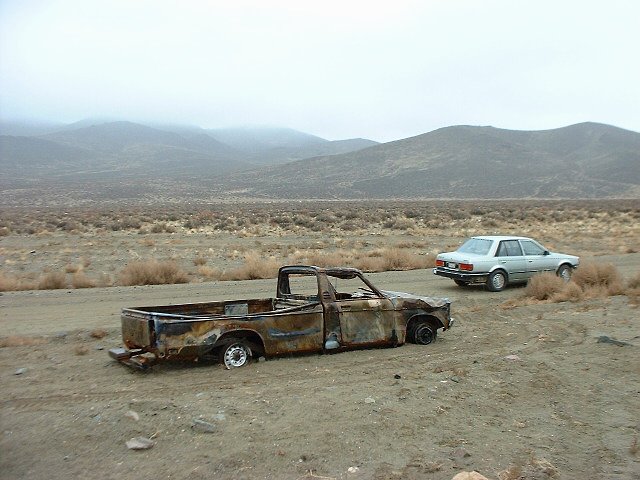
Mine's the one on the right. On the morning of day 4, it was snowing up in camp, and raining down here on the main dirt road, 10+ miles from the highway. Coming home over the Dagget Pass to Tahoe, and then down Hwy 50, it snowed and rained a bunch, but thankfully chains were never required. My car's engine had a problem with a sticking hydraulic valve lifter, which really upped the stress level for the drive home. (But I took a detour through Sacramento anyway, what the heck...) As of this writing I'm still working on it and don't know whether this will be an easy fix, or whether it's time for a new engine (again). I'd have another used engine put in, no problem. Who could say no to a car that's taken me to so many wonderful places? (Addendum: The problem required replacing a single lifter, which was a good deal of work, but basically fun and easy.)
|
[
back to travelogue
]
|